Metals and Non-metals
Explore the physical and chemical properties of metals and non-metals, understand the reactivity series, and learn about their extraction and uses.
Key Topics & Instructions
▼- Physical Properties: Compare metals and non-metals based on their characteristics.
- Chemical Properties: Understand reactions with oxygen, water, acids, and bases.
- Reactivity Series: Learn the activity series of metals and its applications.
- Extraction Methods: Study different methods of metal extraction based on reactivity.
- Properties Comparison: Select elements to compare their physical and chemical properties.
- Reactivity Series: Explore the reactivity order and displacement reactions.
- Visual Learning: Observe properties and reactions through interactive simulations.
- Review the explanations for understanding metal and non-metal chemistry.
Experiment 1: Properties Comparison
Select different metals and non-metals to compare their physical and chemical properties.
Experiment 2: Reactivity Series
Select different metals to understand their reactivity order and displacement reactions.
Metals are elements that are typically hard, shiny, malleable, ductile, and good conductors of heat and electricity. They tend to lose electrons and form positive ions (cations). Non-metals are generally brittle, dull, poor conductors, and tend to gain electrons to form negative ions (anions). Metalloids have properties intermediate between metals and non-metals. The periodic table is arranged with metals on the left, non-metals on the right, and metalloids along the zig-zag line.
Reactivity Series and Metal Extraction
The reactivity series arranges metals in order of their decreasing reactivity. The most reactive metals (K, Na, Ca, Mg, Al) are at the top, while the least reactive (Au, Ag, Cu) are at the bottom. This series helps predict displacement reactions - a more reactive metal can displace a less reactive metal from its compound. For example: Zn + CuSO₄ → ZnSO₄ + Cu.
Different metals require different extraction methods: Electrolysis for highly reactive metals (K, Na, Ca, Mg, Al), Reduction with carbon for moderately reactive metals (Zn, Fe, Pb, Cu), and Native form or simple heating for least reactive metals (Ag, Au, Pt). The method chosen depends on the metal's position in the reactivity series.
Metals react with oxygen to form basic oxides, with water to form metal hydroxides and hydrogen gas, with acids to form salts and hydrogen gas, and with chlorine to form metal chlorides. The reactivity decreases down the series - potassium reacts violently with cold water, while gold shows no reaction even with strong acids.
Non-metals react with oxygen to form acidic or neutral oxides, with hydrogen to form covalent hydrides, and with metals to form ionic compounds. They generally do not react with acids. Non-metals like chlorine are strong oxidizing agents and can displace other non-metals from their compounds.
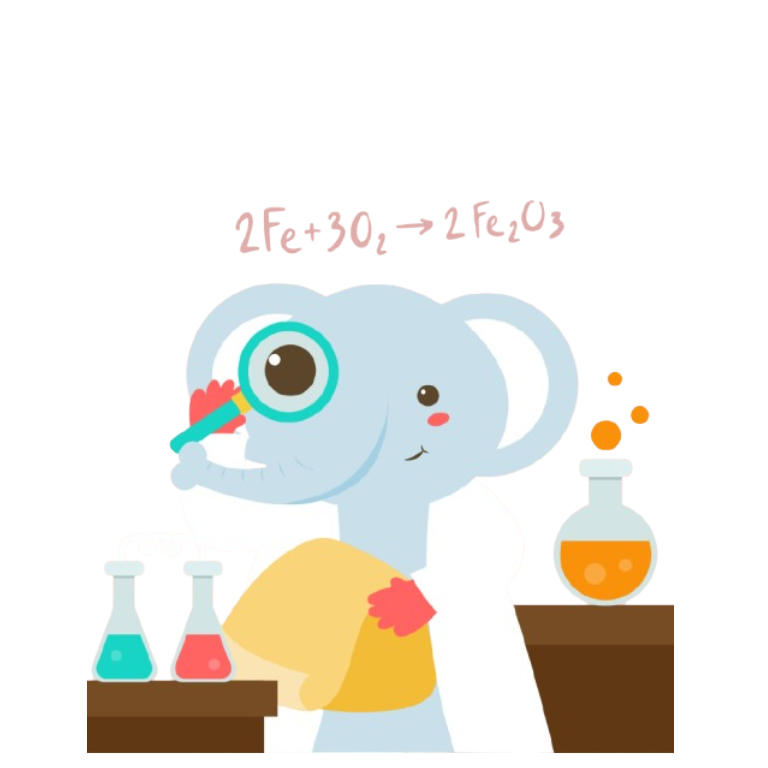
Corrosion is the gradual destruction of metals by chemical reaction with their environment. Iron rusts in presence of air and moisture (4Fe + 3O₂ + xH₂O → 2Fe₂O₃.xH₂O). Prevention methods include galvanization (coating with zinc), electroplating, alloying, and using sacrificial protection with more reactive metals.
Alloys are homogeneous mixtures of two or more metals, or a metal with a non-metal. They are created to enhance properties: Steel (Fe+C) is stronger than iron, Brass (Cu+Zn) is more malleable, Bronze (Cu+Sn) is harder, and Stainless steel (Fe+Cr+Ni) is corrosion resistant. Alloys have specific applications based on their enhanced properties.