Whole Numbers
This interactive chapter focuses on **whole numbers** (starting from 0) and their properties. Students can test concepts like **closure, commutativity, and associativity** under different operations, and visualize addition/subtraction on the **number line**.
Key Topics & Instructions
▼- Define and differentiate natural and whole numbers.
- Understand **successor** and **predecessor**.
- Verify the four properties of whole numbers (Closure, Commutative, etc.).
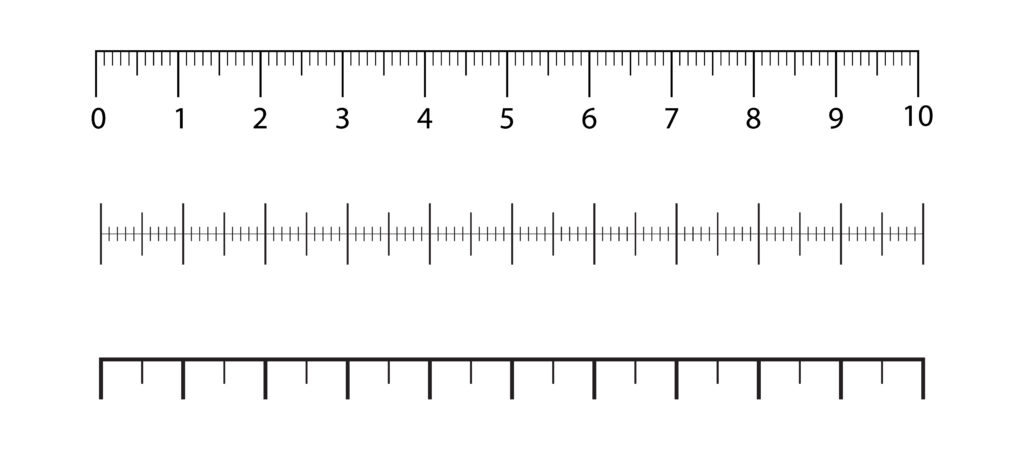
- Perform addition and subtraction on the **number line**.
- Use Experiment 1 to test the properties of whole numbers.
- Use Experiment 2 to visualize simple operations on the number line.
- Check the explanation sections for rules like the **Distributive Property**.
Experiment 1: Testing Number Properties
Enter two whole numbers to check the Closure and Commutative properties.
Experiment 2: Number Line Operations
Visualize addition or subtraction of two numbers on the number line.
The **successor** of a whole number is the number that comes just after it (A + 1). The **predecessor** is the number that comes just before it (A - 1). The smallest whole number is **0**, and it does not have a predecessor.
The Distributive Property
This property links multiplication and addition/subtraction. It states that multiplying a sum by a number gives the same result as multiplying each term by the number and then adding the products.
Formula: **$a \times (b + c) = (a \times b) + (a \times c)$**
Example: $5 \times (10 + 2) = (5 \times 10) + (5 \times 2) = 50 + 10 = 60$.